
Artificial intelligence is undergoing a monumental transition. With the concept of physical AI being proposed, AI is rapidly moving from cloud servers into the physical world. Across the entire realm of industrial automation, from established Autonomous Mobile Robots (AMRs) to emerging humanoid robots, Embodied AI is the inevitable trend redefining how machines interact with their surroundings.
What Is Embodied AI?
The industrial sector is ready for advanced robotics to tackle severe labor shortages and optimize smart manufacturing. However, achieving reliable real-world deployment requires moving beyond traditional automation and fully embracing Embodied AI.
Whether it is an AMR navigating a dynamic warehouse or a humanoid robot manipulating complex tools, reliable operation demands four capabilities working in concert:
- Gathering real-time data from the physical world;
- Processing complex multimodal inputs instantly;
- Reasoning and planning with local AI models;
- Translating those decisions into smooth mechanical action.
Each capability builds upon the previous one, meaning that any bottleneck can compromise the entire system.
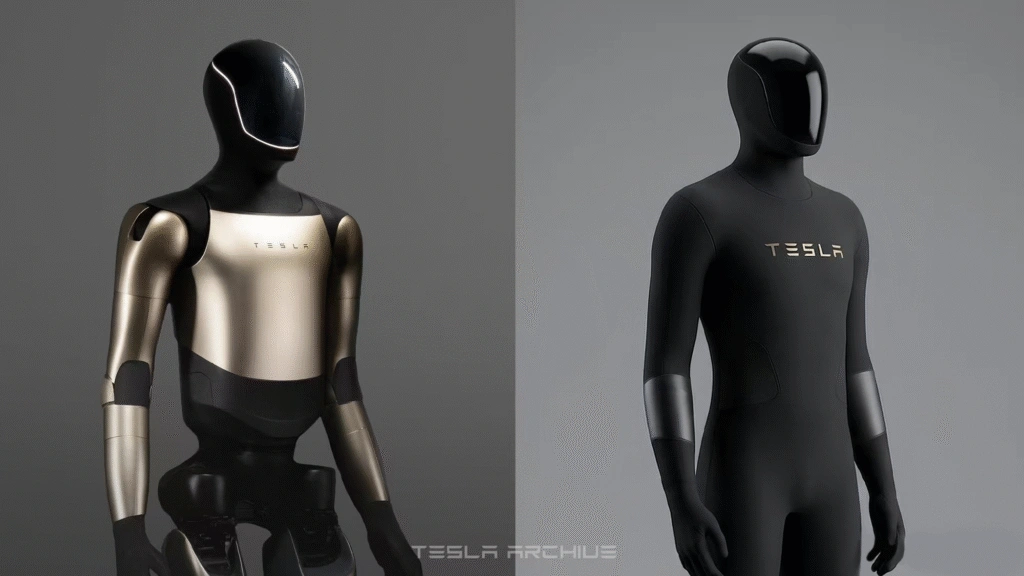
Industry pioneers like Tesla and Amazon are rapidly driving this shift. Yet making machines truly autonomous in chaotic real-world settings demands edge computing hardware that is both reliable and intelligent. While software algorithms are maturing rapidly, manufacturers face severe hardware bottlenecks when upgrading from standard autonomous navigation to fully intelligent, decision-making robots:
1. Real-Time Perception
Complex environments demand real-time perception and rapid response. Navigating dynamic factory floors requires edge computing solutions that run locally to eliminate cloud latency and to ensure immediate, safe execution.
2. Multimodal Computing
A higher level of automation inevitably requires the input and processing of multimodal data. Handling continuous streams of high-resolution vision, LiDAR, and tactile data simultaneously demands neural processing capabilities far beyond what traditional industrial computers can offer.
3. Space Constraints
With limited internal space, balancing weight, volume, and functionality is a crucial aspect of robot design. Achieving maximum performance density while maintaining good heat dissipation is a key challenge that robot development must tackle.
4. Industrial Reliability
Edge hardware operating on factory floors faces unpredictable and complex environments, including constant vibration, dust, electromagnetic interference, and temperature fluctuations. Advanced robots require a core platform that takes all these factors into account to reduce costly downtime and maintenance expenses.
4 Hardware Challenges of Embodied AI
While the software algorithms for Embodied AI are maturing rapidly, equipment manufacturers face severe hardware bottlenecks when scaling deployments from wheeled robots to bipedal humanoids.
- Real-Time Perception: A robot navigating a factory floor cannot wait for cloud latency. Millisecond-level localized reasoning is a strict requirement for operational safety and dynamic obstacle avoidance.
- Multimodal Computing:Today’s next-generation robots fuse high-resolution vision, LiDAR, and tactile sensor data simultaneously. This requires immense neural processing capabilities that traditional industrial computers simply lack.
- Space Constraints: The internal architecture of highly integrated AMRs and agile humanoid form factors is incredibly limited. This dictates a need for hardware designs that offer extreme computing density while maintaining a low thermal envelope.
- Industrial Reliability: A computing node inside a factory environment will face continuous vibration, dust, and wide temperature fluctuations. Hardware must guarantee long-term stability without downtime.
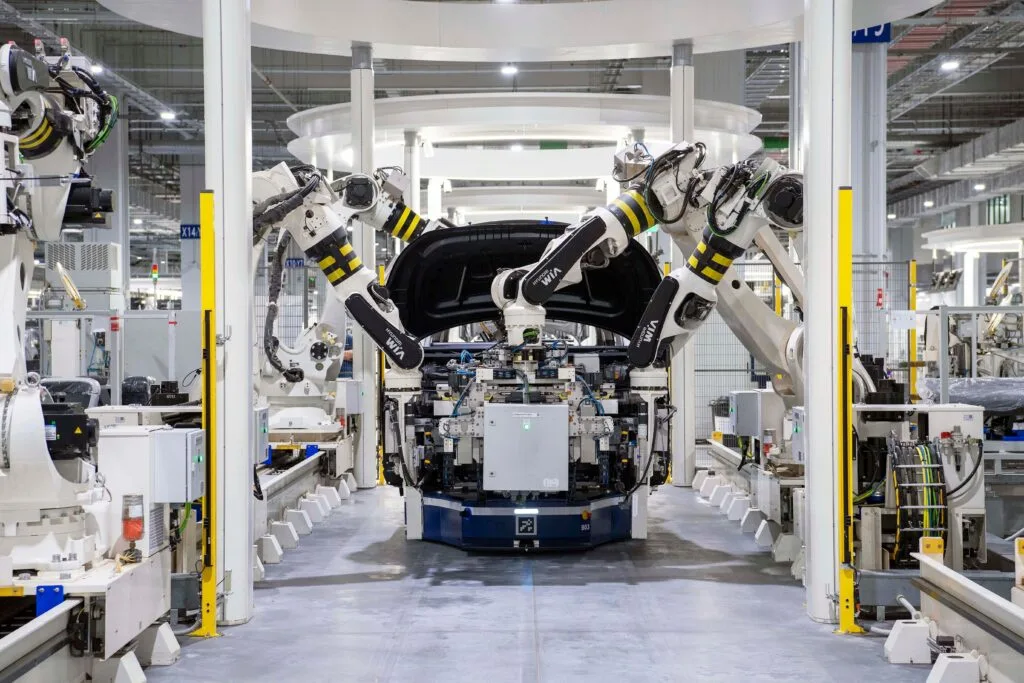
Edge AI Computing Requirements for Modern Robotics
To overcome these bottlenecks and accelerate the transition from AMRs to humanoids, Future Robot has engineered a comprehensive lineup of edge computing platforms. Designed specifically for demanding edge workloads, these solutions provide the computational foundation for physical AI.
Future Robot Edge AI Solutions
To overcome these bottlenecks and accelerate the transition from AMRs to humanoids, Future Robot has engineered a comprehensive lineup of edge computing platforms. Designed specifically for demanding edge workloads, these solutions provide the computational foundation for Embodied AI.
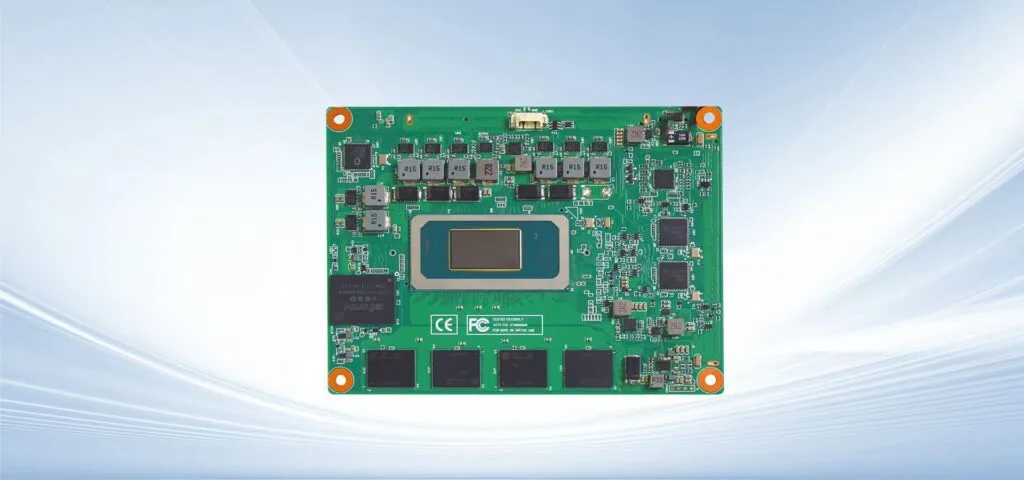
Positioned as the high-performance AI core, the IEM-2170 is a Computer-on-Module (CoM) built for complex visual perception and intelligent decision-making tasks where space is at an absolute premium. It is the ultimate foundation for advanced humanoid robots and high-end robotic arms.
- Unmatched Edge Intelligence: Powered by Intel Core Ultra Series 3 processors, it delivers up to 180 TOPS of AI computing power directly at the edge. This immense computing capability supports locally deployed Large Language Models as well as next-generation Spiking Neural Networks, enabling energy-efficient neuromorphic computing for multimodal sensor fusion.
- Optimized Thermal Performance: It operates on a highly optimized 25W TDP, addressing the power-efficiency challenges inherent in battery-operated systems.
- Extreme Compactness: The module features high-speed board-to-board expansion interfaces integrated into a compact 125 × 95 × 1.6 mm form factor.
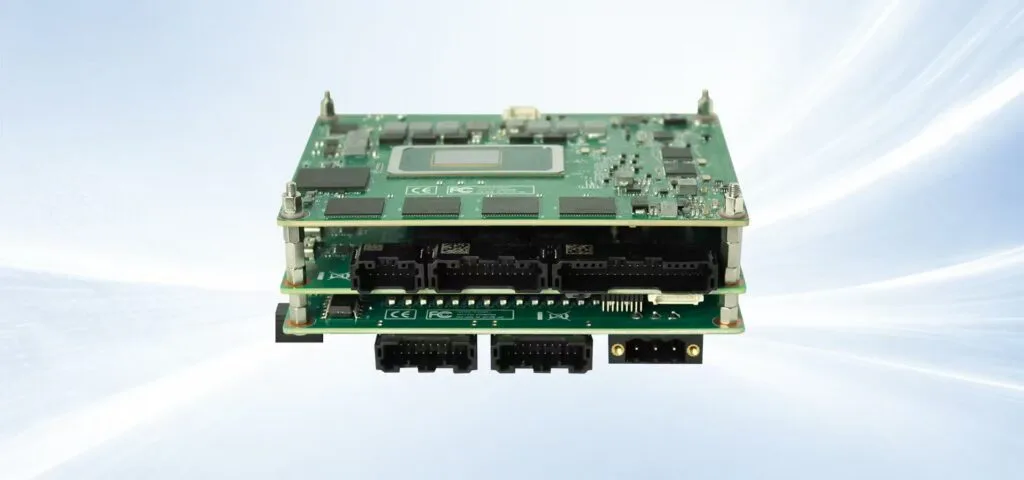
As Embodied AI scales from individual robotic units to comprehensive smart factory environments, the EA510F serves as the robust, stationary central nervous system that coordinates complex localized workloads.
- Unified Vision and Motion Control: Traditional deployments separate vision industrial PCs and motion controllers, causing critical communication delays over external Ethernet. The EA510F unifies both on a single board, allowing vision inference and digital control signaling to share the same processor for zero-latency, real-time response.
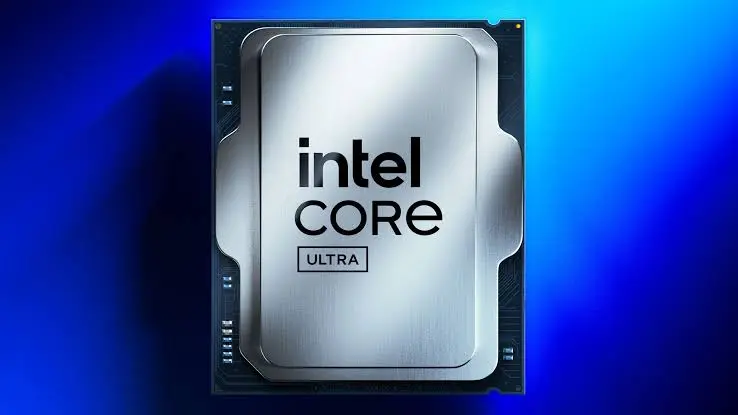
- Integrated and Scalable AI Computer: Powered by the Intel Core Ultra processor, the system combines a CPU, GPU, and NPU to deliver up to 99 TOPS of integrated AI computing power. This architecture efficiently distributes workloads—from low-power continuous object detection to burst-heavy inference—while an onboard MXM slot allows for seamless discrete GPU upgrades as application demands grow.
- Purpose-Built for the Factory Floor: Engineered for extreme reliability, the system features a cable-free internal layout to eliminate vibration-induced failures and supports wide voltage inputs to handle factory power fluctuations. Mounting directly to control cabinets, it seamlessly connects up to seven GigE cameras and the full device layer without requiring external network hubs.
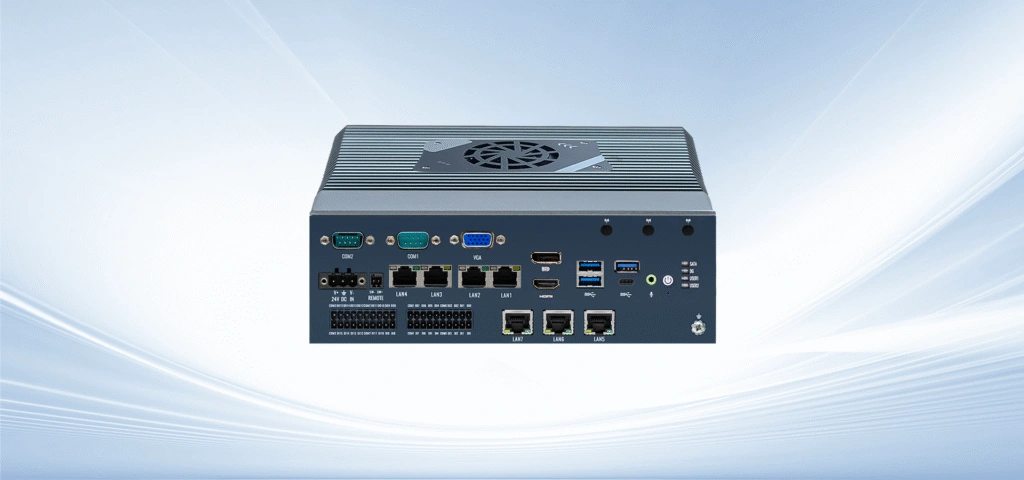
When Embodied AI transitions from single-unit operations to fleet-level management, the EA510F acts as the central nervous system for localized factory zones and smart logistics centers.
- Scalable Edge Inference: Delivers a robust 99 TOPS of Edge AI computing power powered by Intel Core Ultra Arrow Lake processors to handle heavy localized workloads without cloud dependency.
- Maximum Network Connectivity: Features 7 independent Gigabit LAN ports powered by Intel i210 controllers, allowing operators to connect multiple AI cameras, industrial programmable logic controllers, and roaming autonomous vehicles simultaneously without network congestion.
- Harsh Environment Ready: Built with a rugged fanless cooling design and supporting wide voltage input from 9 to 36V DC-in, guaranteeing long-term stability in the most demanding industrial environments.
Conclusion
The transition from theoretical AI models to fully functioning Embodied AI robots requires hardware that can deliver uncompromising performance, spatial integration, and industrial reliability. Practical, scalable robotic deployment is becoming increasingly achievable when backed by the right computational foundation.
From the highly compact IEM-2170 AI Core to the comprehensive AR100 control hub and the rugged EA510F edge node, Future Robot provides the complete end-to-end hardware ecosystem needed to bring next-generation Embodied AI to life.
Accelerate your robotic deployment today by contacting the Future Robot engineering team to access full data sheets, request testing samples, and explore customized hardware solutions.
We’re just a message away! Let us help with your needs.